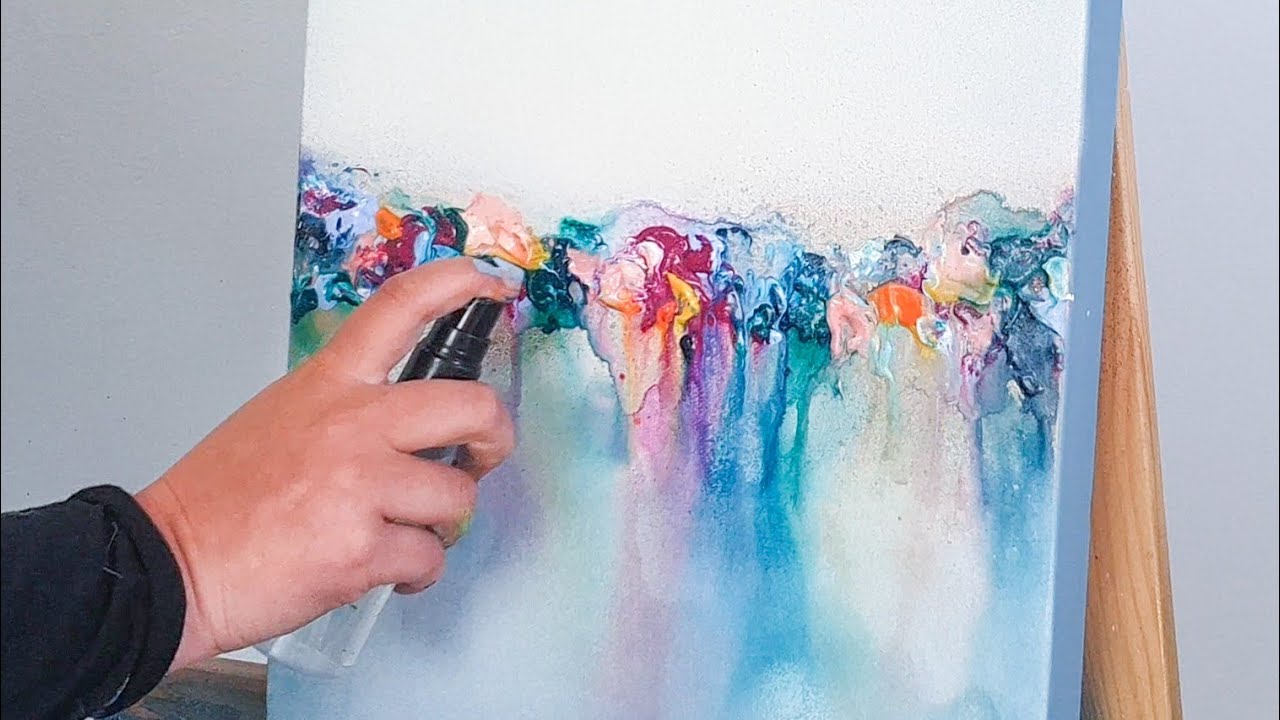
I started painting faster this year because I felt stuck in my usual habits. I kept going back to the same slow steps I had used since college, and even though they worked, they did not feel exciting anymore. One morning I set out a big sheet of canvas paper on the kitchen table, grabbed the thickest brush I owned, and told myself I would paint without stopping to think. I was surprised by how hard that was. My mind kept trying to plan everything ahead of time, like it had a script it wanted to follow, but I pushed the brush anyway. The color slid across the surface in a wide streak, brighter than I expected, and that one mark gave me a weird rush that felt almost like jumping into cold water. I realized how long it had been since painting felt like that.
I kept going, loading the brush again before the first stroke even dried. The second swoop landed crooked, and for a second I almost stopped to fix it, but then I decided to leave it alone. That small choice made the whole thing feel more alive. I stepped back and saw the canvas covered in uneven marks, little drips at the corners, and messy edges. It did not look planned at all, which was exactly why I liked it. I knew I wanted to chase more moments like that. It reminded me that fresh painting ideas often show up only when I let go of the tight grip I try to keep on everything.
A few days later, I tried the same approach with a set of neon pinks and yellows I never use because they feel too loud. I figured if I was already breaking my own habits, I might as well break that one too. I mixed the colors right on the canvas, not even bothering with the palette. Watching the shades shift under the brush felt surprisingly peaceful, even though the colors themselves were loud. I liked how the paint swirled around without needing to be perfect. It felt like a reminder that art does not always have to be neat to feel good.
The more I painted this way, the more I noticed how much my shoulders relaxed. Before, I used to hunch over the canvas like I was preparing for something to go wrong. Now I felt like I was moving with the paint instead of trying to control it. There was a looseness in my arms that spread into my whole body, and sometimes I would catch myself smiling while dragging color across the page. That was new for me. I never thought speed would make painting feel calmer, but it did. I think part of it came from stopping the overthinking. When I work fast, I do not give myself the chance to talk myself out of anything. That freedom felt like a small gift.
One afternoon, I made a rule for myself: if I reached the point where I wanted to fix something, I would add more color instead of correcting it. That simple rule changed everything. Instead of thinking about mistakes, I looked for movement. I added long stretches of blue across places that looked empty, and splashes of orange where things felt flat. The canvas turned into a swirl of shapes that did not match any plan I had, and for the first time in a long time, I did not care. I liked how unpredictable it was. It made the whole room feel more fun, and that spark of fun was something I had been missing from my art for years.
The more I chased that feeling, the more ideas popped up on their own. It felt like I had opened a window after keeping it closed for too long. Fresh subjects started showing up in my head, like quick flashes instead of slow thoughts. I would picture a skyline made of neon blocks, or a cluster of jagged shapes that reminded me of broken glass. I tried all of them, even the ones that sounded strange. Some turned out messy, but others surprised me with how much energy they carried. I learned that following fast ideas sometimes brings out the best parts of my creativity.
I remember one session where I stood in front of a fresh canvas and felt that old hesitation creeping back. I kept thinking about what the final piece should look like instead of letting myself explore. To break that feeling, I dipped my brush straight into a jar of thick blue paint and dragged it across the center in one fast motion. The mark was uneven and a little wild, and it instantly loosened me up. I added more color without stopping to plan, letting the brush scrape and slide wherever my hand wanted to go. It felt like waking up after a long nap, almost like my brain finally realized it was allowed to play again. I think that is when I started trusting this faster way of working a little more.
There is something interesting that happens when I stop worrying about getting everything right. I start noticing small things I used to ignore, like how the paint mixes when I move the brush at an angle, or how a streak of red can change the whole mood of the piece. These tiny discoveries keep me excited. I used to be so focused on the final result that I missed the fun parts happening right under my hands. Now I pay attention to those little shifts because they tell me when a piece is heading somewhere new. It feels like following a trail that shows up only after the first bold marks are down.
One day I even surprised myself by working with a palette knife instead of a brush. I had avoided it for years because it always felt too unpredictable, but now unpredictability seemed like something worth chasing. The knife dragged thick swirls of paint across the surface, leaving raised ridges that caught the light in a way I had never noticed before. I loved that it forced me to move differently. It pushed me to think more about texture, which added a whole new layer to what I was making. I realized that letting myself try tools I used to avoid opened up a new set of painting ideas I had never even considered before.
I also started experimenting with backgrounds that were not fully dry before adding shapes over them. It created soft blends that made the whole piece feel more dynamic, almost like the colors were having a conversation with each other. At first I worried that everything would turn into muddy mixes, but most of the time the results looked vibrant and full of movement. I kept stepping back between strokes and noticing how the image shifted in ways I did not expect. That made the process fun instead of stressful. It felt like watching a storm change the sky minute by minute.
As I got more comfortable with this faster style, I started bringing music into the room when I painted. Before, I preferred silence because I thought I needed full concentration, but now the rhythm seemed to help me keep my hands moving. Fast songs made me paint in sweeping motions, while calmer ones led to smaller shapes and softer blends. It amazed me how much the sound changed the flow of the piece. Sometimes I would pause and look at the marks and feel like the canvas had its own beat. Painting with music made the whole session feel more physical and alive. It also helped me stop overthinking, because I stayed focused on the movement instead of the outcome.
There have been days when I finish a session and the whole table is speckled with tiny dots of paint from quick strokes. The sleeves of my old hoodie have dried streaks in every color imaginable. I used to try to stay neat when I worked, but now the mess reminds me that I actually showed up and took risks. Each session leaves these little reminders behind, like footprints of every choice I made. I like feeling that evidence around me. It makes the room feel like a space where I can experiment without worrying about mistakes or perfect results.
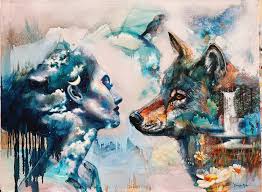
I started keeping a little notebook on the shelf beside my paint table, not for planning but for catching the things I notice during a session. At first I thought I would never use it, but it turned into something helpful. I jot down tiny notes like how a certain blue looks better when I mix it right on the canvas, or how switching to a bigger brush keeps me from getting stuck in small details. Some of the notes look almost silly when I read them later, but they remind me of the moments that made me feel brave while I worked. I think collecting these scraps of thought gives me a place to return to when my mind tries to slip back into old habits.
There was one afternoon when I painted three pieces back to back, all while the sun was coming in from the side window. The light hit the wet paint in a way that made everything glow just a little. I felt like I was racing the sunset, adding streaks of orange and teal while the room changed color around me. I remember breathing a little faster than normal, almost like I did not want to lose the momentum. When I looked at the finished pieces later that night, I could see the energy from that hour trapped in them. They were messy, loud, and full of movement, and they reminded me why I kept chasing this new way of working.
Since I began painting this way, I noticed that ideas come to me in short flashes instead of long plans. Sometimes I am washing dishes or walking through the store and a quick image hits me, like a burst of shapes or a strange mix of colors. Before, I used to brush those flashes away because they did not fit into the careful routines I used to follow. Now I treat them like tiny sparks worth saving. I grab my phone or that little notebook and mark them down. It is funny how these quick impressions often turn into my favorite pieces, ones that feel alive even before I touch the brush.
A friend of mine asked if this faster style makes me nervous. I told her it used to, but now it feels freeing. Working quickly means I do not freeze up every time I question myself. Instead, I just move. I think the movement itself unlocks something creative, something I had been missing for a long time. When I slow down too much, I start worrying about every little thing. When I move fast, the colors blend in ways I could not have planned anyway. It feels like letting the art lead the session instead of me forcing it to behave in a certain way. That shift helped me find even more painting ideas than I expected.
I have also been layering colors more than I ever did before. There was a time when I used to wait for everything to dry completely before adding something new, but now I enjoy watching shades mix on their own. When the brush pulls a streak of wet paint across a half dry surface, it makes these soft edges that feel almost like smoke. It gives the whole piece a sense of motion. Sometimes I follow those edges with a sharper line of black or white to make the contrast stronger. I like how the layers feel like conversations between colors, each one adding something the last one could not say alone.
Every once in a while, I challenge myself to finish a full piece in under twenty minutes. Not because I want to rush, but because I want to trust my first instincts. The clock does something funny to my brain. It makes me bolder. I stop thinking about whether something will look right and start thinking about how it feels to drag the brush across the canvas. When the timer runs out, I usually step back and laugh. The painting almost always looks different than what I imagined, but more interesting too. It carries the raw energy from the session, and that is something I am learning to value more than perfect lines or exact shapes.
There was a morning when I woke up before the sun and could not shake the feeling that I needed to paint right away. I did not overthink it. I made a cup of coffee, set it on the counter, and started pulling out the colors that felt right without even naming them in my head. The sky outside was still a dull gray, and something about that quiet hour made the colors on my table look brighter. I grabbed a wide brush and covered the canvas with quick strokes, letting the early stillness push me forward. By the time the sun finally showed up, the painting already felt warm and full, almost like I had captured a little spark from the day before it even began.
After that, I started paying attention to how different times of day change the way I work. In the soft light of morning, my marks turn gentle, even if I am trying to work fast. In the middle of the afternoon, when everything feels louder, my strokes get sharp and full of contrast. At night, the colors look richer under the lamp, and I end up building heavy layers just because the mood feels different. It surprised me how much these shifts affected the way I moved. It made me feel like each session had its own personality. Instead of trying to force a style, I let the room and the moment pull me into something new.
I also learned how important it is to let myself walk away sometimes. Even when I am working fast, I can hit points where my mind starts getting tangled again. When that happens, I leave the room for a few minutes, stretch my arms, drink some water, and come back before the paint dries. That short break always changes the way I see the canvas. What looked confusing before suddenly feels clear. I spot where another burst of color would help or where a shape needs to be pushed forward. Those pauses became part of my rhythm, and they help me keep my energy without slipping back into old habits.
One of the best surprises came when I started painting on scraps of cardboard I had planned to throw away. There was something playful about using a surface that felt low pressure. Since it was not a fancy canvas, I felt free to take risks. The texture of the cardboard grabbed the paint in a different way, making rough streaks that I actually loved. Some of those scrap pieces turned into artwork I ended up keeping. It made me see that the surface does not have to be perfect for the art to feel strong. Sometimes using something unexpected brings out ideas I would never have tried on a clean white canvas.
Another thing that helped me grow was limiting myself to three colors for an entire session. At first this sounded impossible because I love dipping into every shade I can find, but the limitation did something interesting. It made me focus more on movement and shape instead of getting lost in blending. With only a few colors to work with, I had to think about how to use contrast in a smarter way. Oddly enough, it made the painting feel more bold. The simple palette gave everything a sense of purpose, and the limited choices pushed me to try marks I had not tried before.
There was one piece from that experiment that stayed with me. I used only red, white, and black, and the whole painting came together in about fifteen minutes. I dragged thick blocks of red across the surface and then carved into them with a thin brush dipped in black. It looked wild and messy in a way I enjoyed. When I stepped back, it felt like the colors were almost vibrating. That piece reminded me that rules can be good when they leave room for instinct. I liked knowing that something so strong could come from such a simple setup.
I kept thinking about how much my process had changed since I started pushing myself to paint faster. It almost felt like learning a new language, one where the sentences were made of color instead of words. Before this shift, I used to sketch everything lightly in pencil first, trying to map out the perfect shapes. Now I skip that part completely. I go straight to the brush and let the first stroke decide what the second one should be. It feels a little like running downhill and trusting your feet to keep up. That feeling is exactly what I wanted more of, because it reminds me why I fell in love with art in the first place.
One afternoon I pulled out a jar of bright green that I never touch. It was one of those colors that always looked too sharp on the palette, like it was daring me to do something bold. I dipped a large brush into it and made one long arc across a fresh canvas. The mark cut through the space like a slice of light. I felt my pulse jump a little. I added layers of blue and purple around it, letting the curve stay visible underneath. That first streak ended up guiding the whole piece. It is funny how one simple mark can change the direction of an entire session. It made me want to try more colors I usually avoid.
Sometimes I work on the floor instead of the table, especially when I want more freedom to move. Spreading out on the floor makes me feel like a kid again. I use wide strokes that stretch from one side of the surface to the other, and I do not worry about the paint splattering on the drop cloth. Working this way gives me more room to swing my arm and create marks that have real momentum in them. I like how my whole body gets involved. The art stops being something delicate and becomes something physical, something I can feel in my shoulders and back long after the session ends.
There was one piece where I mixed colors directly with my hands. It was not planned. I had been trying to get a blend smooth with the brush, and it kept looking too stiff. On impulse, I set the brush down and used my palm to smear the colors together. The mix came out softer than anything I could have made with a tool. My fingertips left tiny lines in the paint, almost like little trails. I kept going, adding more layers with my hands, and the piece turned into something warmer and more personal than I expected. Working like that reminded me that tools are just suggestions. I can always choose another way to make a mark.
I also tried painting while standing farther away from the canvas. I held the brush at the very end of the handle and reached out to make marks without getting close. It created wobbly lines and loose curves that I could never make when I am right up against the surface. Those loose marks gave the piece a sense of motion that surprised me. It taught me that changing my distance from the canvas can shift the whole feeling of the work. Sometimes stepping back gives me more control than being close ever could.
By this point I realized how much my imagination had opened up. I stopped thinking of ideas as big projects I needed to plan. Instead, I saw them as sparks I could follow. Some came from colors I had ignored for years. Others came from shapes I noticed in passing, like shadows on the kitchen counter or a reflection in a car window. The more I paid attention, the more ideas seemed to appear on their own. That made each session feel like a small adventure. I kept chasing whatever felt alive in the moment, and it helped me collect even more painting ideas without forcing anything.
There was a weekend when I decided to take all my finished pieces and line them up across the living room floor. I wanted to see if this new way of painting had changed more than I realized. When I stepped back, I noticed something right away. Every piece had a kind of movement in it that my old work never had. Some had big sweeping lines that curved like waves, while others had sharp edges that felt like sparks frozen in the air. I walked along the row slowly, trying to remember how each one felt while I was making it. Looking at them all together made me see how far I had come without even trying to track it.
I used to judge my work by how neat or finished it looked. Now I find myself asking different questions. Did the piece feel good to make? Did I stay open instead of freezing up? Did I let the colors guide me instead of fighting them? These questions help me understand my own growth in a way that has nothing to do with perfection. Some of the pieces on the floor looked uneven or rough around the edges, but I liked them anyway. They showed me moments where I took chances. Those marks felt honest, and that honesty meant more to me than any perfect line.
A friend visited that afternoon and asked why some pieces looked brighter than others. I told her it depended on my mood during that session. If I came in feeling restless, I usually reached for loud colors and quick strokes. If I had a calmer energy, the colors softened without me even thinking about it. It was strange hearing myself explain it, because I had never realized how much my feelings shaped the way the paint moved. She pointed at one piece with a swirl of yellow breaking through a deep purple block and said it looked like a burst of hope. I had not seen it that way, but once she said it, I could not unsee it.
That conversation helped me notice something else. When I stop overthinking, the art becomes more honest. I am not painting what I think I should paint. I am painting whatever comes out of the moment. Some of my favorite pieces came from days when I felt uncertain or stressed, and the colors gave me a place to put that energy. Other times the work felt joyful, almost like dancing with the brush. These shifts made me appreciate the process even more. Painting became a way to understand myself without needing the right words.
One session stands out clearly in my memory. I was having a long day where everything felt rushed, and my thoughts were bouncing around like they were trying to escape. I sat down with a canvas anyway, mostly because I wanted to clear my head. I grabbed a bright orange and dragged it across the surface in fast lines. The lines turned into shapes, and the shapes turned into something that looked like rising heat. I kept layering colors until the whole canvas felt warm. When I was done, I realized the tension I had been carrying all day had eased. That piece showed me how movement in art can sometimes settle movement in the mind. It is a strange mix, but it works.
Another time I pushed myself to work with only straight lines. It sounded simple, but it changed the whole way I approached the canvas. Instead of letting my hand curve naturally, I forced myself to move in quick, direct strokes. The result came out sharper than my usual work. It reminded me of city buildings stacked against the sky. The piece had a strong rhythm running through it, almost like the pattern of footsteps on a busy street. That experiment pushed me to try more ideas that did not come naturally. It helped me see that there is value in exploring shapes I usually avoid.
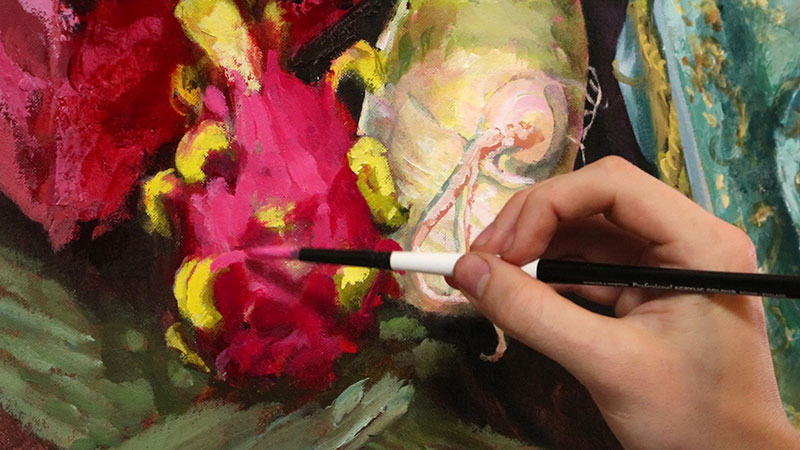
There was a day when I set out all my canvases but felt unsure what to make. Instead of waiting for a perfect idea, I chose three random colors and started with a single bold mark right in the middle of the surface. That mark looked nothing like anything I had planned, but it sparked something. I added a second mark, then a third, and before I knew it, shapes started forming that reminded me of city lights at night. The strange part is that I had not been thinking about cities at all. The image just appeared as I worked. It reminded me how often painting ideas show up only after I stop trying so hard to find them.
As I kept building the piece, I noticed how the marks leaned into each other. Some strokes stretched across the page like long shadows, while others stood strong and bright like reflections on wet pavement. I liked how the different lines interacted without me forcing them to match. I kept working until the whole canvas felt like a memory I did not know I had. When I stepped back, the painting looked full of motion, almost like a street scene blurred by rain. It amazed me that something so unplanned could feel so complete.
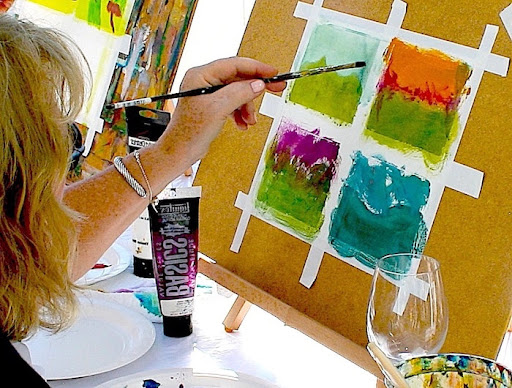
Later that week I tried something new. Instead of starting with color, I began with empty space. I placed strips of tape across the canvas at random angles, leaving blank sections open. Then I painted over everything with big, loud strokes. When I pulled the tape off, the white lines underneath broke the piece into sharp sections. It looked like shards of glass scattered across a table. That contrast between the open space and the thick color made the whole painting feel energetic. The experiment taught me that holding back in a few places can make the bold parts shine even brighter.
I liked the result so much that I made three more pieces the same way. Each one came out different because the tape landed in its own strange pattern. One had thin white lines that cut through the canvas like tiny cracks. Another had wide empty spaces that made the colors look like they were spilling into the gaps. I loved how unpredictable it all felt. Even when I used the same tools, the outcome changed with every session. That randomness kept me excited, because I never knew what the piece would become until the very end.
There was also a moment when I tried switching to round brushes after weeks of using only flat ones. The shift changed everything. Round brushes made loops and soft circles that felt playful. I started creating clusters of swirling shapes that stacked on top of each other like bubbles. The loops overlapped and made new colors in the spaces where they met. It felt almost like watching water ripple outward after dropping a pebble. That simple change reminded me that even small adjustments in tools can lead to something fresh.
One of my favorite sessions happened on a rainy afternoon. The sound of the rain tapping on the roof made me want to paint something with the same rhythm. I mixed blues and greens and let the brush fall across the canvas in short, steady strokes. The marks looked like falling drops. I kept building layer after layer until the entire painting looked like it was moving. When I finished, I felt calmer than when I started. It surprised me how the weather outside could shape the feeling inside the room. It made me want to pay more attention to the world around me during each session.
There was one morning when I walked into the room and felt like everything on my table was too familiar. The brushes were lined up in the same old cup, the jars of paint sat in their usual spots, and even the canvas felt predictable. I decided to shake things up a little. I grabbed a stack of paper towels, folded them into a thick pad, dipped the whole thing into a mix of colors, and dragged it across the surface. The result was rough and streaky, nothing like the marks I usually make. But those streaks gave the piece a kind of raw energy that pulled me in. It felt like discovering a new voice I did not know I had.
After that experiment, I started looking for everyday objects that could make interesting marks. I tried the edge of a cardboard strip, the bottom of an old plastic cup, and even a small piece of sponge I found in the drawer. Each tool made a different kind of shape. Some left wide, uneven patches of color. Others made sharp lines or tiny dots. It felt almost like learning the alphabet all over again, but with paint. I liked how each session turned into a small adventure where anything around me could become a tool. It helped me stop relying on the same predictable motions.
One afternoon I even used the side of my hand to create long, sweeping smears. I covered my palm with a blend of red and white, then pressed it onto the canvas and dragged it across. The shape looked like the trail of a shooting star, wide at the beginning and fading toward the end. I made three or four more marks like that and watched how they curved around each other. It gave the whole piece a sense of motion, like a swirl of wind captured on paper. Those marks made me feel connected to the work in a way that brushes sometimes cannot.
Another day I taped a large sheet of paper to the wall so I could paint while standing. Moving vertically instead of horizontally changed everything. My arm moved in a different direction, and the marks stretched downward in long, falling lines. I liked how painting on the wall made me think with my whole body instead of just my hands. I felt taller, like the art needed more space from me, and that space helped me see the canvas from a fresh angle. Sometimes a small change like this is enough to wake up a session that might otherwise feel slow.
There were also days when I played with the thickness of the paint. I mixed water into the colors until they were thin enough to drip. I held the canvas upright and watched the drops slide downward in slow trails. Some blended into the background, while others kept their shape and left little pathways of color. The drips felt almost like time moving across the canvas. I would tilt the surface left or right to guide the trails, and the piece would slowly build itself in front of me. The whole process felt calming, almost like listening to rain find its own path down a window.
One of the most surprising discoveries came when I stopped painting with my dominant hand. I tried switching to my left hand just to see what would happen. At first the marks looked shaky and uneven, but those uneven lines had a charm I did not expect. They forced me to loosen up because I could not control them the way I normally do. The shapes looked more spontaneous, and the whole piece felt lighter. Using my non dominant hand showed me that not every mark needs to be perfect. Sometimes letting go of control opens the door to more creativity.
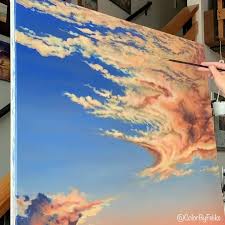
There was a late evening when I walked into the room with no plan at all. I felt tired from the day, but something in me still wanted to paint, even if it was only for a few minutes. I squeezed out a few random colors onto the palette and let my hand move wherever it wanted. I made fast shapes that crossed over each other, and soon the canvas started filling up with loops and bright patches. It amazed me how quickly the piece started to feel alive. I did not know what it was becoming, but I liked watching it grow stroke by stroke. Sometimes the work only needs a spark to get started.
As I kept layering colors, the shapes began to blend in ways I did not expect. Some of the strokes softened into each other like fog, while others stayed bold and sharp. The mix made the whole painting feel full of movement. That is the part I have grown to love the most. I can start with nothing but a feeling, and somehow the canvas finds its direction before I know what I am doing. It feels like the art takes on a life of its own. I used to think creativity had to start with perfect planning, but now I see that many of my best painting ideas come from moments when I do not plan at all.
There was one point in the session when I paused and held the brush in the air for a moment. I noticed how the colors on the palette looked almost like a tiny landscape. Blues mixed into greens, and a streak of bright orange cut through the middle. I dipped the brush into that orange and made a sudden, sweeping mark across the canvas. That one stroke changed everything. It tore through the softer background and gave the piece a strong center. I stepped back and felt a little surprised by how bold it looked. That is something I keep learning. One brave decision can shift the entire mood of the work.
As the piece grew, I noticed that some areas needed more contrast. I mixed a darker shade and added thin lines around the edges of certain shapes. Those lines helped anchor the movement and make the colors feel more connected. It reminded me of how adding tiny details at the right moment can give the painting a stronger voice. I used to avoid bold outlines because I worried they would look too heavy, but now I see how they can tie everything together. Sometimes even the simplest mark can make a big difference.
While I was painting, I noticed that the room felt warm from the lamp in the corner. The light made the colors glow in a soft way that felt almost comforting. It made me want to choose more warm tones, so I mixed reds and yellows until they looked almost golden. When I brushed them onto the canvas, the whole painting shifted again. It started to feel like a sunset breaking through a cloudy sky. Moments like that make me appreciate how much the environment shapes the work. A small change in light can send the whole piece in a new direction.
I ended the session by adding a few white marks along the top. They were small and gentle, almost like reflections. I did not want to overwork the piece, so I forced myself to stop while it still felt fresh. That is one of the hardest lessons for me. Stopping at the right moment takes just as much courage as making the first bold mark. When I looked at the finished piece, I felt proud of how alive it looked. It reminded me that even on a tired night, creativity can still show up if I give it a chance.
There was a morning when I set out a new canvas and felt a strange mix of excitement and pressure. I had been making so much work lately that part of me wondered if I could keep the momentum going. Instead of letting that thought slow me down, I grabbed the biggest brush I owned and made a long streak of blue across the surface. The streak was rough and uneven, but it felt honest. It helped me snap back into the rhythm I had built over the past few weeks. Sometimes I forget that the first mark does not have to be smart or planned. It just has to exist. Once the paint is on the canvas, things start moving on their own.
I began layering in wide patches of color, letting the shapes form naturally. The brush left trails of paint that curved in strange directions, and I let them stay exactly as they were. I liked how the colors stacked against each other in ways I could not predict. Some of the shapes looked like pieces of a landscape, even though I had not been thinking about landscapes at all. Other parts looked purely abstract, more like bursts of energy than recognizable forms. That mix felt exciting. I stepped back a few times to see how it was growing, and each time I saw something new that I had not noticed before.
As I kept working, I decided to try something I had been avoiding. I added a patch of bright yellow right in the upper corner, even though it felt risky. Yellow can be tricky. It can take over the whole piece if I am not careful. But when I brushed it on, it brought a warmth that balanced the cooler tones underneath. It felt almost like sunlight hitting a wall. I stood still for a moment, just looking at the way the yellow changed the whole mood of the painting. That small risk paid off. It reminded me that experimenting with color is one of the easiest ways to push past hesitation.
After that, I started mixing the colors directly on the canvas again. I pulled a soft green into the edge of the yellow and watched how the shades blended. The blend came out smoother than I expected, almost like water fading into sand. I made a few more blends like that, letting the transitions feel loose. I liked how the different colors carried their own stories, but still worked together to build something larger. It made the whole piece feel connected in a way I had not planned at the start.
There was one moment when I felt stuck. The center of the painting looked flat, like it needed something to pull the eye through. I stood there for a long second, brush still in my hand, not sure what to add. Then I made a fast, curved shape with a mix of black and navy. It sliced through the middle and gave the painting a stronger sense of direction. The shape reminded me of a path or a ribbon caught in motion. Once it was there, the whole piece clicked together. It felt complete in a way it had not just a minute earlier.
As I finished the session, I noticed how relaxed my shoulders felt. That is always the sign that the work went well. When I get too tense, the lines start to look tight. But when I paint with freedom, the strokes come out softer and more confident. I think that is what keeps me coming back to this faster, looser style. It brings me into the moment and pulls the rest of the world outside the room. Even when I start with uncertainty, the art finds its way forward if I let it. That feeling has become one of the most important parts of my routine.
There was a long afternoon when I wanted to try something slow even though my whole journey lately had been about speeding up. I set out a canvas and told myself I would move with intention, but not caution. I dipped the brush into a deep red and let it glide in a long arching line. The line reminded me of a horizon that had been stretched too far. I added a second line under it, softer and shorter, and suddenly the canvas looked like it had two voices speaking at once. It made me want to build something that felt layered, something that carried both calm and movement at the same time.
As I kept adding color, the painting started to feel like a map of emotions from the past week. Every streak had a tiny memory in it. A mark of blue made me think of a walk I took one evening when the sky looked heavy. A flash of bright orange reminded me of a moment of laughter I had with a friend. I liked seeing how these small pieces of life found their way into the work even when I did not plan for it. The canvas turned into a quiet record of everything I had been carrying. I think that is one of the reasons I trust this way of working. It catches things that words cannot.
Halfway through the session, I felt the piece drifting in a direction I did not expect. The colors were softer than the ones I usually reach for when I want energy. But instead of forcing the painting to match the mood I thought I wanted, I leaned into what it was becoming. I made gentle strokes across the middle and let the paint blur into the background. The blur reminded me of mist rising from a field early in the morning. I kept blending until the whole center felt light and open. That softness gave me a new idea, and I added sharper marks around the edges to balance it. The contrast worked better than I expected.
A little later, I picked up a palette knife and dragged it across the top portion. The knife caught the paint in uneven strips that broke apart as I moved it. The marks looked like peaks in a mountain range, tall and jagged. I liked how the texture pushed back against the softness in the middle. It made the painting feel more complete, like it had both breath and structure. I stepped back and studied the piece, trying to understand what it needed next. Sometimes the hardest part is waiting for the answer to show up instead of rushing to fill the space.
I added a few thin white lines, letting them drift across the shapes without trying to guide them too much. The white marks brightened everything just a little. They made the other colors feel richer. As I continued, I noticed the painting was turning into something more peaceful than what I usually create. But it still carried the energy I love. It felt like a blend of everything I have been exploring since I started pushing myself to work faster. It surprised me how natural the final result felt. I realized that experimenting does not always mean going louder or bigger. Sometimes it means letting the work lead me someplace new.
By the time I reached the bottom of the canvas, I was smiling. There was a feeling of release in every line and patch of color. I liked how the painting held pieces of my week, my moods, and the small choices I made along the way. It made me appreciate this whole journey even more. All the experiments with speed, movement, and bold marks had opened doors I did not even know existed. They gave me confidence to try anything, even things that felt strange or risky at first. And that confidence brought me countless painting ideas that kept my creativity moving forward.
There was a day when I felt tired before I even reached the canvas, but I still wanted to show up and make something. I pulled out a piece of thick paper instead of a stretched canvas because it felt lighter, almost like giving myself permission to play. I mixed a few colors on the palette without thinking too much about them and made a single swipe across the page. The swipe came out soft and uneven, and I liked how it set the tone. I added more strokes, keeping them loose and gentle. The painting began to take on a kind of drifting look, like clouds shifting across the sky at the end of a long day.
As I kept working, I thought about how much my relationship with art had shifted over time. There was a period when I treated every painting like a test. I worried about wasting supplies. I worried about making something that did not look good enough. But now, after all these experiments, the work feels more like a place to breathe. I do not aim for perfection anymore. I aim for honesty. I aim for whatever pulls me forward in the moment. That small change opened doors I did not expect. It made painting feel like an adventure instead of a chore.
Halfway through the piece, I switched from the brush to a scrap of cloth. I dipped the cloth into a mix of purple and white and pressed it onto the page. The marks came out foggy, almost like smoke drifting upward. I dragged the cloth again and watched how the shapes softened at the edges. I liked how the paint behaved when it was not controlled by clean tools. It felt more natural, more like something shaped by chance. I added a few darker streaks with the edge of the cloth to give the piece some structure, and the contrast made everything feel fuller.
There was a moment when I paused and looked at the page from across the room. From a distance, the painting looked almost like a memory. It had no clear subject, but it held a feeling I could not name. I walked closer and added a few quick strokes to sharpen the shapes that felt too soft. Then I stepped back again. I liked how the small changes shifted the balance of the whole thing. It reminded me that tiny adjustments can make a big difference, even in the middle of a loose and unplanned piece.
When the painting felt close to finished, I added a thin line of deep blue across the lower half. The line stretched from one side to the other, cutting through the softer shapes above it. It gave the piece a sense of direction, almost like a horizon forming out of nowhere. I did not plan for it, but it felt right. Sometimes the best ideas come from these quiet moments at the end, when the painting starts telling you what it needs.
As the session ended, I stood there for a while, looking at everything I had made over the past weeks. The bold strokes, the wild shapes, the drips, the fast marks, the soft blends. Every piece told a story about taking chances and trusting movement instead of hesitation. I realized how much joy this process brought me, not because every painting turned out perfect, but because each one taught me something new. It made the work feel alive. It reminded me that art grows stronger when I let myself follow the energy instead of fighting it.
This whole journey showed me that creativity does not have to be slow or careful to be meaningful. Sometimes the best work comes from letting go, moving fast, and staying open to whatever happens next. And if someone else is trying to spark their own ideas, I hope they find the same kind of freedom in exploring new approaches and trusting the moment. For anyone who wants to dive deeper, here is the resource that helped me keep pushing forward with fresh painting ideas.